
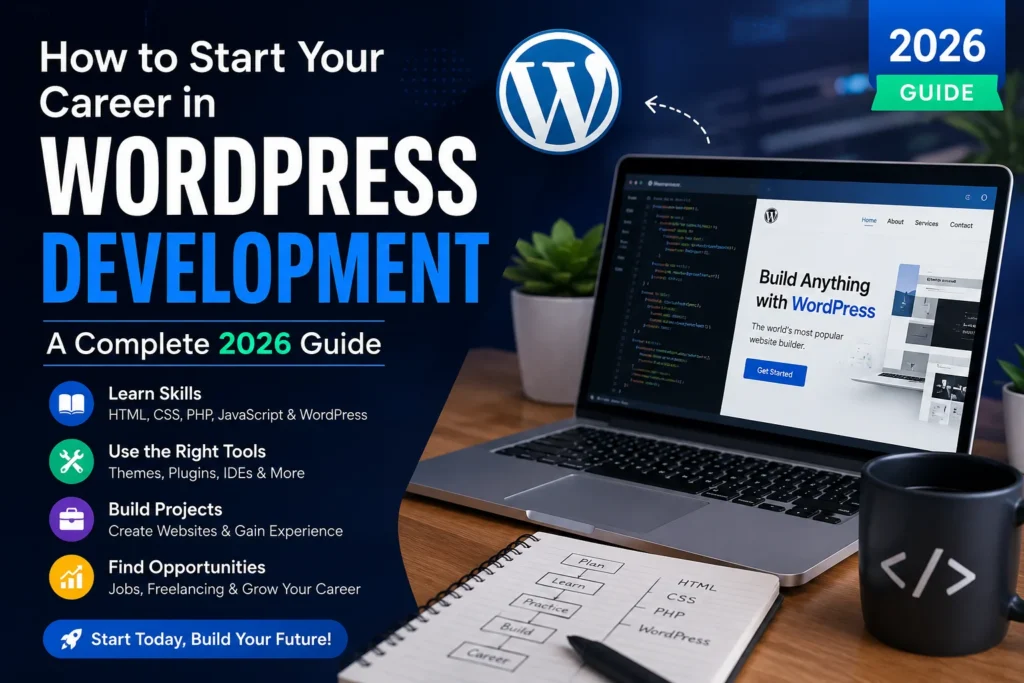

If you’ve ever wondered how to start a career in WordPress development, you’re looking at one of the most accessible and in-demand paths in tech today. WordPress powers over 40% of all websites on the internet, which means businesses everywhere — from Lahore to New York — constantly need skilled WordPress developers to build, customize, and maintain their sites.
Whether you’re a complete beginner exploring web development for the first time, or a front-end web developer looking to specialize, this guide walks you through everything: the skills you need, realistic salary expectations, free and paid learning resources, and a step-by-step roadmap to landing your first WordPress developer job.
Let’s get started.
What Is WordPress Development?
WordPress development is the process of building, customizing, and maintaining websites using WordPress — the world’s most popular content management system (CMS). A WordPress developer works with themes, plugins, and the WordPress core to create everything from simple blogs to complex ecommerce stores and enterprise web applications.
Unlike general web development, which can involve dozens of frameworks and platforms, WordPress development is focused specifically on the WordPress ecosystem — its templating system, plugin architecture, hooks, and REST API.
WordPress vs. Web Development — What’s the Difference?
This is one of the most common questions beginners ask, so let’s answer it directly:
Web development is the broad practice of building websites and web applications using any combination of languages, frameworks, and platforms (React, Laravel, Django, custom PHP, etc.).
WordPress development is a specialized branch of web development that works within the WordPress CMS. A WordPress developer still needs core web development skills (HTML, CSS, JavaScript, PHP), but applies them specifically to WordPress themes, plugins, and site architecture.
In short: every WordPress developer is a web developer, but not every web developer works with WordPress. That’s actually good news for beginners — you get the credibility and career flexibility of general web development skills, while working inside a more structured, beginner-friendly ecosystem.
Why WordPress Development Is a Smart Career Choice
Here’s why so many people are choosing WordPress development as their entry point into tech:
Massive market share — WordPress powers over 40% of the web, meaning consistent, long-term demand for developers.
Low barrier to entry — You don’t need a computer science degree. Many successful WordPress developers are self-taught.
High freelance potential — Platforms like Upwork and Fiverr are full of WordPress developer jobs, from small business websites to full ecommerce builds.
Flexible career paths — You can work in-house at an agency, freelance remotely, or eventually move into full stack web development or WordPress plugin development as a specialist.
Steady salary growth — As you move from junior to senior roles, WordPress developer salary potential increases significantly, especially with WooCommerce, custom plugin development, or headless WordPress experience.
Key Skills Every WordPress Developer Needs
To succeed, you’ll need to build skills across four areas: front-end, back-end, WordPress-specific tools, and supporting skills like SEO.
1. Front-End Skills (HTML, CSS, JavaScript)
Every WordPress developer starts here. You’ll use:
- HTML to structure page content
- CSS to style themes and layouts
- JavaScript for interactivity, especially with the growing use of the WordPress Block Editor (Gutenberg), which is built on React
2. Back-End Skills (PHP & MySQL)
WordPress itself is written in PHP and uses a MySQL database. Understanding these two technologies is non-negotiable for real WordPress development work — especially if you want to move beyond simple theme customization into custom plugin development or backend web development.
3. WordPress-Specific Skills
This is where general web developers become WordPress developers:
- Theme development — building custom themes and child themes from scratch
- Plugin development — extending WordPress functionality with custom plugins
- Hooks, actions & filters — WordPress’s core system for customizing behavior without editing core files
- WordPress REST API — connecting WordPress to external apps and headless front-ends
- WooCommerce development — a huge and growing niche for ecommerce-focused developers
- Page builders — Elementor, Divi, and the native Gutenberg block editor
4. SEO & Supporting Skills
A WordPress developer who understands on-page SEO is far more valuable to employers and clients — because a beautifully coded site that doesn’t rank on Google isn’t doing its job. It’s worth learning the basics of on-page SEO, keyword research, and Core Web Vitals, since page speed and performance directly affect how well your client’s sites perform in search.
Soft skills matter too: client communication, project management basics, and the ability to translate a business need into a functional website.
Essential Tools for WordPress Developers
Beyond languages, you’ll need to get comfortable with:
- Local development environments — Local by Flywheel, XAMPP, or DevKinsta for building sites offline
- Git & version control — essential for team-based development and job applications
- Code editors — VS Code is the industry standard
- Browser dev tools — for debugging CSS/JS issues
- Elementor / page builders — for rapid client-facing development
- WordPress hosting environments — understanding hosting basics (SiteGround, WP Engine, Cloudways) helps you deploy and troubleshoot live sites
WordPress Developer Job Scope, Salary & Demand
The demand for WordPress developers spans local markets and remote/global opportunities alike.
Salary in Pakistan
WordPress developer salary in Pakistan varies significantly by experience level and city:
- Entry-level (0–1 year): Typically starts modest, often paired with internships in cities like Lahore, Karachi, and Islamabad
- Mid-level (1–3 years): Salaries rise noticeably, especially with plugin/theme development or WooCommerce expertise
- Senior-level (3+ years): Senior WordPress developers, especially those handling custom development or team leadership, command significantly higher pay — often supplemented by freelance income
Cities like Lahore, Karachi, and Islamabad have thriving web development company ecosystems actively hiring WordPress developers, both for local clients and international projects.
Global & Remote Opportunities
Remote WordPress developer jobs are widely available on platforms like Upwork, and many international companies (UK, USA, UAE, Australia) hire Pakistani WordPress developers remotely because of strong technical skills and competitive rates.
Freelance vs. Full-Time
Both paths are viable:
Full-time roles at a web development agency offer stability, mentorship, and structured growth.
Freelance WordPress developer work offers flexibility and the potential to earn from multiple international clients simultaneously, though it requires stronger self-discipline and marketing of your own services.
How to Learn WordPress Development (Free + Paid Resources)
You don’t need an expensive bootcamp to start. Here’s a realistic learning path:
Free Resources
- WordPress.org Developer Resources — the official documentation and codex for themes, plugins, and hooks
- freeCodeCamp — solid free foundation in HTML, CSS, and JavaScript
- YouTube tutorials — countless free, project-based WordPress theme and plugin development tutorials
- W3Schools — great for reinforcing HTML/CSS/PHP fundamentals
Paid Resources
- Coursera offers structured full stack web development courses that complement WordPress-specific learning with computer science fundamentals
- Udemy — affordable, project-based WordPress theme and plugin development courses
- Specialized bootcamps — faster but more expensive, useful if you want structured mentorship
A smart approach: start free to confirm you enjoy the work, then invest in paid, project-based courses once you’re ready to build a portfolio.
Step-by-Step Roadmap: How to Become a WordPress Developer
- Learn the fundamentals — HTML, CSS, JavaScript, and basic PHP
- Install WordPress locally — practice building and breaking things in a safe, local environment
- Learn theme customization — start with child themes before building from scratch
- Study the WordPress Codex and hooks system — this is what separates hobbyists from real developers
- Build 3–5 portfolio projects — a business site, a blog, a WooCommerce store, and a custom plugin
- Learn Git and basic deployment — push your projects to GitHub
- Apply for internships or entry-level roles — this is where real-world experience compounds your skills fast
- Start freelancing on the side — even small projects build your portfolio and client-communication skills
- Specialize — WooCommerce, custom plugin development, or performance optimization are all high-value niches
Building a WordPress Developer Portfolio
Your portfolio is your strongest job-search asset — often more important than a formal degree. Include:
- 2–3 live, functioning websites you built (even personal or practice projects count)
- At least one custom plugin, however small
- A WooCommerce or ecommerce example, if possible
- Clean, well-documented code on GitHub
Once your portfolio site is live, don’t stop there — make sure it’s actually visible to potential employers and clients. A quick read on why new websites don’t rank can help you avoid common mistakes that keep even well-built portfolio sites invisible on Google.
Freelancing as a WordPress Developer
Freelance WordPress development is one of the fastest ways to gain real client experience while earning income. Popular platforms include Upwork, Fiverr, and PeoplePerHour.
Tips for getting your first freelance clients:
- Start with a niche (e.g., WooCommerce stores for small retailers)
- Offer a limited, well-defined service (e.g., “I’ll build you a 5-page business website in WordPress”)
- Use your portfolio projects as proof of skill, even before you have paid client work
- Be responsive and professional — communication often wins projects more than raw skill
Real-World Career Paths
WordPress developers typically follow one of these tracks:
- Agency Developer — Starts as a junior developer at a web development company, builds client sites, gradually takes on more complex custom development
- In-House Developer — Works for a single company managing their WordPress site(s) long-term
- Freelancer — Manages multiple clients independently, often specializing in a niche like WooCommerce or performance optimization
- Full Stack Transition — Many WordPress developers eventually expand into full stack web development, using their PHP and JavaScript foundation to work with frameworks like Laravel or React
Current Job Opportunity Example
To give you a sense of what real entry-level listings look like, here’s a live example currently being advertised:
💼 Job Role: WordPress Developer 🏢 Company: Tech Solutions.ae 📍 Location: Garden Town, Lahore (Hybrid) 🕒 Job Type: Contract (6 Months) 🌙 Shift: 3:00 PM – 11:00 PM 📅 Experience: 0–2 Years 📩 Apply: anumramay@techsolutions.ae (Subject: WordPress Developer – Lahore)
Listings like this show exactly why 0–2 years of hands-on portfolio work matters more than years of formal education when you’re starting out.
The Future of WordPress Development
WordPress isn’t standing still, and neither should your skillset:
- Full Site Editing (FSE) is reshaping how themes are built, shifting toward block-based, no-code-friendly design
- Headless WordPress — using WordPress purely as a backend/CMS while the front-end is built in React or Next.js — is a growing high-value niche
- AI-assisted development is speeding up coding, debugging, and content workflows, making it more important than ever to understand why code works, not just how to copy it
- Performance & Core Web Vitals are increasingly tied to search rankings, making performance-focused WordPress developers more valuable
Staying current with these shifts — rather than only learning “classic” theme development — will keep your skills relevant for years.
Why Choose ROZGAR for Your WordPress Career
If you’re serious about turning these skills into a real job, why choose ROZGAR for your next step: structured job matching, real employer connections, and a direct path from learning to earning. You can explore advanced jobs at ROZGAR to see current WordPress developer openings suited to your experience level.
Frequently Asked Questions
What skills do I need to become a WordPress developer? You need HTML, CSS, JavaScript, and PHP fundamentals, plus WordPress-specific knowledge of themes, plugins, hooks, and the REST API.
Is WordPress development in demand? Yes. WordPress powers over 40% of all websites globally, creating consistent demand for developers in both local and remote job markets.
How much do WordPress developers earn? Earnings vary widely by experience, location, and specialization (like WooCommerce or custom plugin development), with senior developers and skilled freelancers earning significantly more than entry-level roles.
Can I become a WordPress developer without prior coding experience? You can start with page builders and light customization, but real career growth and higher-paying roles require learning HTML, CSS, JavaScript, and PHP.
How long does it take to learn WordPress development? Most beginners can build basic sites within 2–3 months of focused learning, though becoming job-ready with custom theme and plugin development typically takes 6–12 months of consistent practice.
Is WordPress development a good career in 2026? Yes — especially with the shift toward Full Site Editing, headless WordPress, and AI-assisted development, which are creating new specialized, higher-paying roles within the WordPress ecosystem.
Conclusion: Your Next Step Starts Now
Starting a career in WordPress development doesn’t require a degree, a huge upfront investment, or years of waiting. It requires a clear roadmap, consistent practice, and a portfolio that proves what you can build — and now you have all three.
Start with the fundamentals, build real projects, and don’t wait for the “perfect” moment to apply for your first role or freelance client. The demand is there — you just need to show up prepared.

Pingback: 5 In-Demand IT Jobs in Islamabad 2026: Apply Today